Infrared Thermography and Electrical Testing in Cincinnati
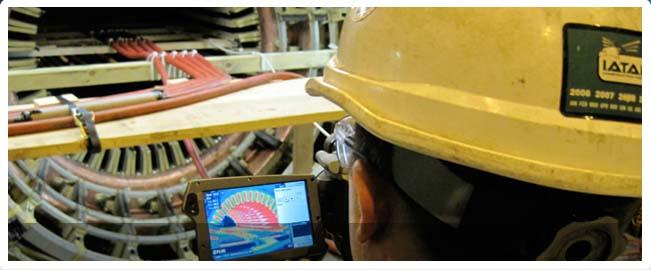
Most electrical failures give a warning first: a connection running hot, insulation breaking down, a breaker that no longer trips on time. Cooper Electric finds those warnings with infrared thermography and electrical testing, while your equipment keeps running, so you can fix problems on your schedule instead of after a shutdown, a fire or an injury.
Testing and Maintenance Services
One contractor for the whole program: we find the problem, document it, and our licensed electricians fix it.
How Infrared Thermography Works
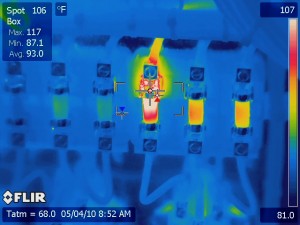
Every electrical connection carries some resistance, and resistance makes heat. When a connection loosens, corrodes or is overloaded, it gets hotter than identical parts carrying the same load. A thermal camera shows those temperature differences instantly, without touching anything. We compare each component against similar components and against the load it is carrying, then rank every finding by severity.
Thermography works best under normal load, so we scan while your facility is running. There is no shutdown, and nothing is opened that does not need to be. Panels are opened only by qualified electricians following NFPA 70E safe work practices.
What We Find
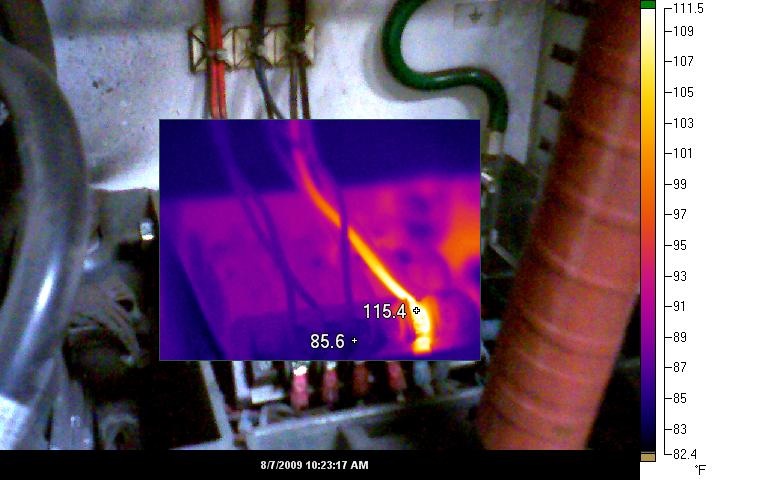
- Loose or corroded connections on lugs, bus joints and terminations, the most common cause of electrical failure
- Overloaded circuits and unbalanced phases that shorten equipment life
- Failing breakers, fuses and fuse clips, including open fuses that leave a motor single-phasing
- Overheating motors, bearings and drives before they seize or trip
- Transformer hot spots and blocked cooling
- Harmonic heating in neutrals and transformers, which points to a power quality problem
What Should Be Scanned
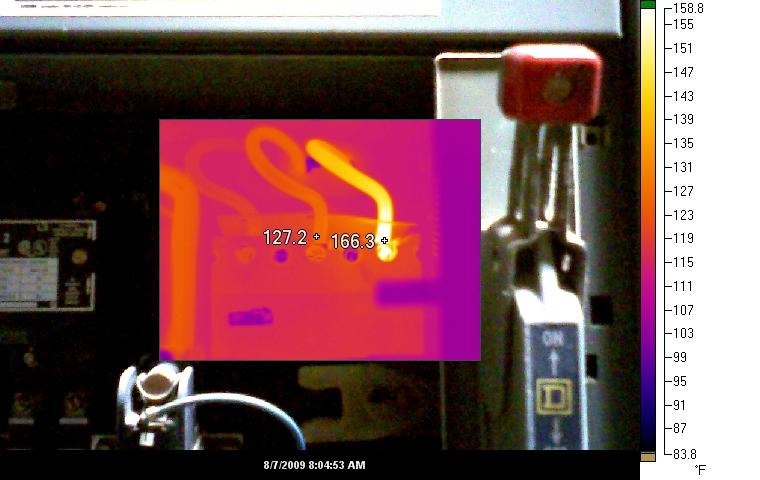
- Utility service entrance, switchboards, switchgear and main disconnects
- Transformers, substations and feed poles
- Bus duct and busway plug-ins
- Motor control centers, VFDs and starters
- Panelboards, disconnects and machine control panels
- Automatic transfer switches, generators and UPS systems
- Motors, couplings and bearings
NFPA 70B Is Now a Standard, Not a Suggestion
With the 2023 edition, NFPA 70B changed from a recommended practice to the Standard for Electrical Equipment Maintenance. It calls for a documented electrical maintenance program, a condition assessment of each piece of equipment, regular inspection of all electrical equipment, and more frequent infrared inspection of equipment in poor condition. The current 2026 edition keeps those requirements and adds more guidance on setting maintenance intervals from equipment condition. Insurers, safety managers and corporate risk teams increasingly expect to see it.
We help you meet it: equipment assessment, thermographic and electrical testing, written records, and the repairs that close out each finding. See how we build an NFPA 70B maintenance program.
How an Inspection Works
- Plan the route. We review your one-line diagram or walk the facility to list every panel, MCC and transformer, and set a time when the equipment is under normal load.
- Scan under load. Our certified thermographer images each piece of equipment and records load readings for anything abnormal.
- Rank every finding. Each problem gets a priority, from monitor to repair immediately, based on temperature rise and load.
- Deliver the report. You receive a thermal image of each finding, its location, the measured temperatures, and our recommended repair.
- Fix and verify. Our licensed electricians make the repairs, and we can rescan the equipment to confirm the problem is gone.
What Is in Your Report
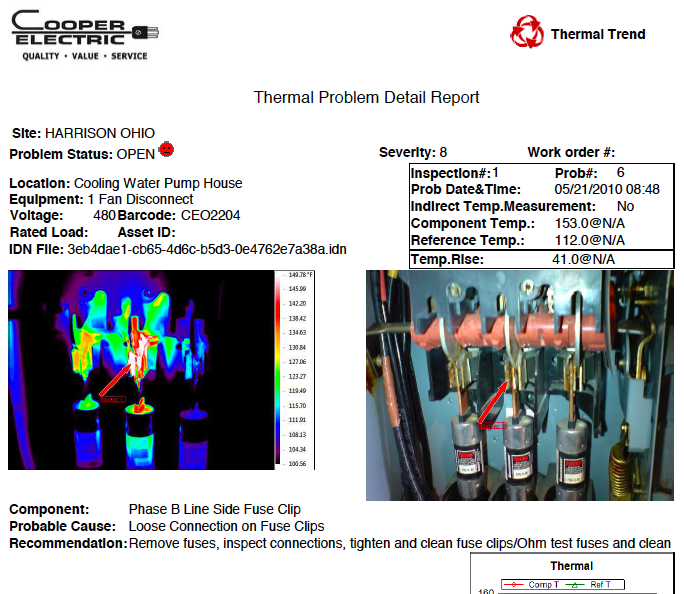
- Thermal image of every abnormality
- Equipment name and location, so maintenance staff can go straight to it
- Measured temperatures, temperature rise and load
- Severity rating and a clear recommended action
- A summary list you can hand to your insurer or use to schedule repairs
Why Not Just Buy a Thermal Camera?
Many facilities own a camera. Few have a trained thermographer who knows how emissivity, reflections, load and airflow change a reading, and who can tell a harmless warm spot from a connection about to fail. Our thermographer is certified Level I and Level II, and every finding is reviewed by licensed electricians who can make the repair the same week.
Who We Serve
Manufacturing and industrial plants, commercial and office buildings, warehouses, institutions and other facilities across Greater Cincinnati and Northern Kentucky, from a single switchboard to a full plant.
Thermal Image Gallery: Before and After Repair


Frequently Asked Questions
How often should we have an infrared inspection?
Most facilities scan once a year. Equipment that is critical, heavily loaded, in a harsh environment or already showing problems should be scanned more often; NFPA 70B calls for infrared inspection at least every six months for equipment in poor condition. We can recommend an interval for each piece of equipment.
Do we have to shut down for the scan?
No. Thermography has to be done with equipment energized and under load to show problems, so your operation keeps running. Shutdowns are only needed later, for the repairs, and we schedule those with you.
How long does an inspection take?
It depends on the number of panels and how easily they can be reached. A small building can often be finished in a few hours, while a large plant may take one or more days. We give you a time estimate before we start.
Can a thermal scan lower our insurance cost?
Many insurers ask for annual infrared inspections and may consider them in underwriting. Ask your carrier; our report is written so you can send it directly to them.
What does thermography not find?
A camera only sees heat. Insulation that is breaking down, a breaker that will not trip, or a power quality problem may not show up as heat yet. That is why we pair thermography with insulation resistance testing, breaker testing and power quality analysis.
Schedule an infrared inspection or testing program
Call us to set up a one-time scan, a full test program or an NFPA 70B maintenance plan, with no interruption to your operations.
Cincinnati: 513-271-5000 Northern Kentucky: 859-341-1550 Request Service Online
5-Star Reviews on Google by hundreds of local customers. Read our Google reviews
Licensed electrical contractor in Ohio (OCILB #20022) and Kentucky (#CE16472). Serving Greater Cincinnati and Northern Kentucky since 1946.